

Badami is a destination that quietly carries centuries of Indian history within its rocky landscape. Located in Karnataka, this small town was once the capital of the early Chalukya dynasty and played a crucial role in shaping temple architecture in South India. Today, Badami attracts travellers who are interested in history, culture, and slow, meaningful travel rather than crowded tourist attractions.
The story of Badami begins in the 6th century, when the Chalukyas chose this place as their capital. Surrounded by rugged sandstone cliffs and protected naturally by hills, Badami was both a strategic and artistic centre. The rulers here were great patrons of art, architecture, and religion, which is clearly visible in the monuments they left behind.
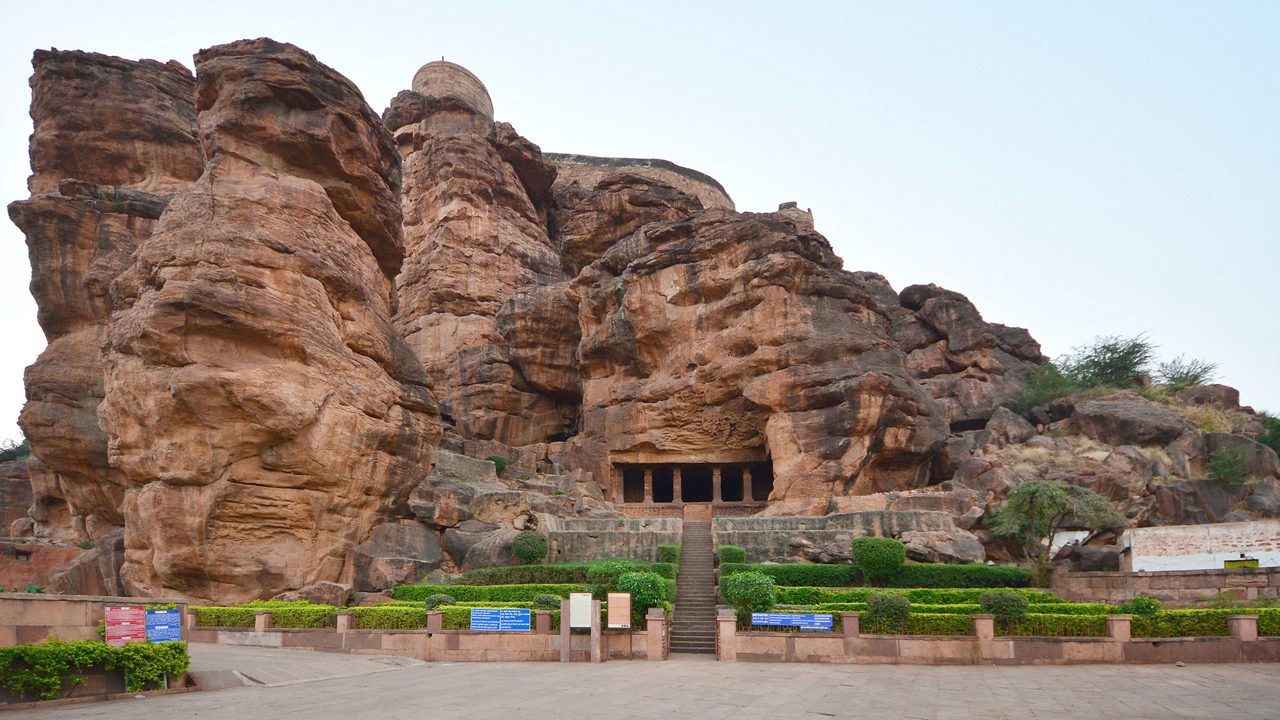
The most famous attractions in Badami are its rock-cut cave temples. There are four main cave temples carved directly into the red sandstone cliffs overlooking the Agastya Lake. These caves are dedicated to different faiths, reflecting the religious tolerance of the Chalukya period. Cave One is dedicated to Lord Shiva and features impressive carvings of Nataraja in various dance poses. Cave Two and Cave Three are dedicated to Lord Vishnu and display detailed sculptures depicting scenes from Hindu mythology. Cave Four is a Jain cave, highlighting the importance of Jainism during that era.
What makes these caves remarkable is not just their religious significance but also their architectural excellence. The precision with which these temples were carved using simple tools shows the advanced craftsmanship of the time. Pillars, ceilings, and sculptures have survived for over a thousand years, standing as a testament to the skill and vision of the artisans.
At the foot of the caves lies the Agastya Lake, which adds a sense of calm and balance to the dramatic surroundings. The lake is named after the sage Agastya and is surrounded by temples on all sides. The Bhutanatha Temple, located along the lake, is one of the most scenic spots in Badami. Its reflection in the water during early mornings and evenings creates a peaceful atmosphere that allows visitors to pause and absorb the beauty of the place.
Another important landmark is the Badami Fort, which sits atop a hill overlooking the town. The climb to the fort may be slightly steep, but the view from the top makes the effort worthwhile. From here, visitors can see the entire layout of Badami, including the caves, the lake, and the surrounding countryside. The fort also houses ancient granaries, watchtowers, and temples, offering further insight into the town’s past.
Badami’s historical importance extends beyond its monuments. It represents a crucial phase in the evolution of Indian temple architecture. The Chalukyas experimented with styles that later influenced the temples of Pattadakal and Aihole, as well as later dynasties across Karnataka. Visiting Badami helps travellers understand how Indian architecture transitioned from rock-cut caves to structural temples.
From a travel perspective, Badami is best explored at a relaxed pace. The town is compact, and most attractions are located close to each other. This makes it suitable for families and senior citizens when planned thoughtfully. Comfortable footwear, vehicle-based sightseeing, and morning visits to monuments help ensure a pleasant experience.
The best time to visit Badami is between October and March. During these months, the weather is cooler and more suitable for outdoor exploration. Summers can be extremely hot, making sightseeing uncomfortable, while the monsoon season may make climbing and walking difficult due to slippery surfaces.
Badami is often combined with nearby heritage sites like Hampi, Aihole, and Pattadakal, creating a rich cultural circuit. Together, these destinations offer a deeper understanding of Karnataka’s historical and architectural legacy.
For travellers seeking more than just photographs, Badami offers stories carved in stone. It is a place where history feels alive, where each sculpture has a meaning, and where time seems to slow down. A visit to Badami is not rushed or overwhelming. Instead, it invites travellers to observe, reflect, and appreciate the depth of India’s ancient heritage.